No athlete peaks every week. They build, they push, they taper, they recover. And then they begin again.
Yet many of us approach our professional lives as if every week should operate at championship intensity.
Every deadline matters.
Every meeting feels important.
Every quarter has aggressive goals.
Every launch requires extra effort.
Every open space on the calendar somehow gets filled.
Then, when our energy starts dropping, we assume we need to become more disciplined, more productive or better at managing our time.
But what if the problem isn't your calendar management?
What if the problem is that you are trying to perform at the same intensity all year? Sustainable performance requires rhythm.
And sometimes the most useful thing you can do is stop looking at your calendar week by week and start looking at your life and leadership in seasons.
Not every week should be a peak week
There are naturally periods in our careers when more is required.
A major launch.
Budget planning.
Board preparation.
A new role.
A reorganization.
A demanding travel schedule.
An important client engagement.
Those periods may legitimately require additional focus and energy. The problem comes when temporary intensity quietly becomes your normal operating model. One demanding week turns into a demanding month. The launch ends, but another initiative immediately takes its place.
The business trip is over, but you return to a calendar packed with meetings.
You finish one major deliverable and immediately begin the next without creating any space to recover.
Eventually there is no distinction between a normal week and a peak week. And when everything is treated like a peak, nothing really is.
High performance doesn't mean giving maximum effort every day.
It means knowing when to push, when to maintain, and when to recover so that you have the capacity to perform when the moment actually requires it.
Think in performance seasons
One simple way to approach your calendar differently is to think about your workload in three basic seasons:
Build
This is where you strengthen the foundation.
A build season might include learning something new, preparing for a major initiative, developing your team, improving systems or creating the infrastructure you will need later.
Build seasons are not necessarily quiet.
But the focus is preparation rather than constant delivery.
This is the season to ask:
What will make the next demanding period easier?
What skill, process or relationship needs strengthening now?
Where can I build capacity before I actually need it?
Athletes don't start conditioning the week before the championship.
Leaders shouldn't wait until a major business moment to discover that their systems, teams or energy are already stretched.
Peak
Peak seasons are the moments when you intentionally increase your output.
A launch.
A conference.
A strategic planning cycle.
A major presentation.
A period of organizational change.
This is when you decide that a particular outcome deserves more of your time, energy and attention.
The important word is intentionally.
Peak performance works because it is temporary.
You know why you are pushing.
You know what matters most.
And ideally, you know approximately when that period of intensity will end.
That makes peak performance very different from simply being overloaded all the time.
Recover
Recovery is the phase many leaders skip.
The project finishes and we immediately move on.
The conference ends and we fly home directly into meetings.
The quarter closes and the new quarter begins the next morning.
But performance doesn't reset simply because the calendar changed.
Recovery is where your physical and mental capacity catch up with the effort you have been giving.
That might mean protecting a lighter meeting day after travel.
Taking a real lunch instead of eating through another call.
Getting back to your movement routine.
Creating thinking space.
Using vacation instead of carrying it indefinitely.
Or simply acknowledging that the week after an intense period should not look exactly like the week before it.
Recovery doesn't have to mean disappearing for two weeks.
Often it is about deliberately lowering the load long enough to restore your ability to perform well again.
Your calendar is telling you what you believe about performance
Look at the next eight weeks on your calendar. What does it tell you?
Are there obvious moments of increased intensity?
Can you see any space around them?
Are your most demanding weeks immediately followed by equally demanding weeks?
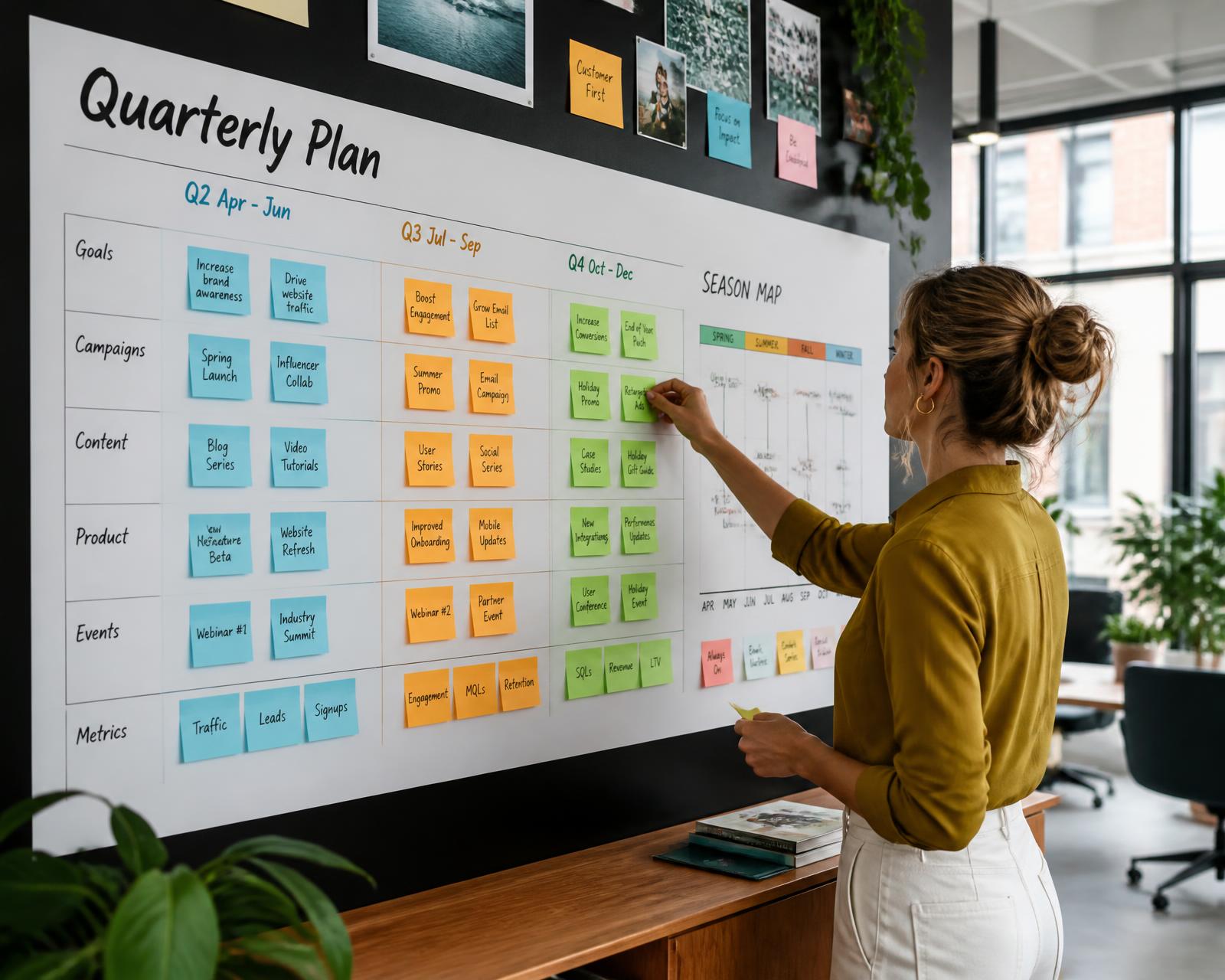
Block the next two quarters into phases before anyone else fills them for you.
Have you scheduled recovery with the same intention that you scheduled the work?
Many leaders plan deadlines, travel, meetings and deliverables first.
Recovery is expected to happen somewhere in whatever space remains.
Usually, very little space remains.
The solution isn't necessarily to create a perfectly balanced calendar.
Some weeks won't be balanced.
Some seasons won't be balanced.
But imbalance should have boundaries.
You should be able to recognize:
a: I'm entering a demanding period.
b: This is what matters most during it.
c: This is what I am temporarily deprioritizing.
d: And this is how I will reduce the load when it is over.
That level of intention changes performance.
Plan the next quarter before everyone else does it for you
You don't need an elaborate system to start thinking seasonally. Look at the next 60 to 90 days.
Identify the moments that you already know will require more from you. Mark them as peak periods.
Then work backward.
What needs to happen before those periods so you are prepared rather than scrambling?
That becomes part of your build season.
Next, look immediately after the peak.
Where can you protect some capacity?
Can you avoid scheduling a major internal presentation the morning after returning from a conference?
Can you protect one afternoon for building instead of meetings?
Can you avoid launching four major initiatives in the same two-week window?
Can you give yourself and your team time to close one chapter before opening the next?
This isn't about rigidly controlling your calendar.
It is about making deliberate choices before everyone else's priorities fill the space for you.
Sustainable performance requires variation
One of the biggest misconceptions about high performance is that consistency means maintaining the same intensity.
It doesn't.
Athletes are consistent because they continue showing up through different phases of performance.
The intensity changes.
The purpose changes.
The work changes.
But the commitment remains.
Leadership can work the same way.
Some seasons are for pushing.
Some are for building.
Some are for recovering.
And some are simply for maintaining what you have already built.
The skill is recognizing which season you are actually in and resisting the temptation to turn all of them into peak season.
At FLEXwithFe, sustainable performance isn't about lowering your ambition or avoiding demanding work.
It is about becoming more intentional about how you prepare for that work, how you move through it and how you restore your capacity afterward. Because the goal isn't to never sprint.
There will absolutely be moments worth sprinting for.
The goal is to stop living as though the entire year is one.
You don't have to perform at your peak every week to be a high performer.
Sometimes the smartest performance decision you can make is knowing what season you're in and managing your calendar accordingly.